
Marie Curie
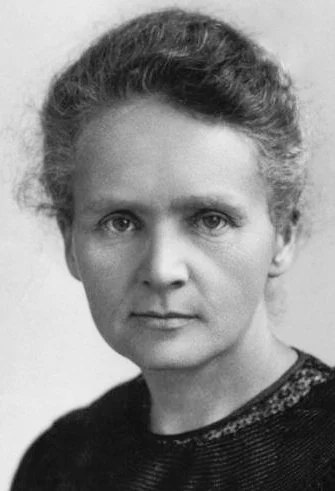
Marie Curie was born in Poland, where she developed a strong love for learning despite limited opportunities for women in education. Her parents were both teachers, and they encouraged her curiosity from a young age. Because women were not allowed to attend university in Poland at the time, she worked as a governess to support herself and save money for her education. Eventually, she moved to Paris to study at the Sorbonne, where she faced financial struggles but excelled in physics and mathematics.
In her scientific career, Marie Curie conducted groundbreaking research on radioactivity, a term she helped define. Alongside her husband Pierre Curie, she discovered the elements polonium and radium. Her work opened up entirely new areas of study and had lasting impacts on medicine, particularly in cancer treatment. Despite facing challenges as a woman in a male-dominated field, she became the first woman to win a Nobel Prize and later the only person to win Nobel Prizes in two different scientific fields.
Marie Curie’s dedication to science came with personal sacrifice, but her legacy continues to influence research and medicine today. Her story is one of resilience, curiosity, and determination, showing that a passion for discovery can overcome even the greatest obstacles.
